
The Marsh & The Metropolis - Urbanisation Near The Pallikaranai Marshland
As Chennai expands, Pallikaranai Marshland shrinks under the weight of concrete, policy and divide.

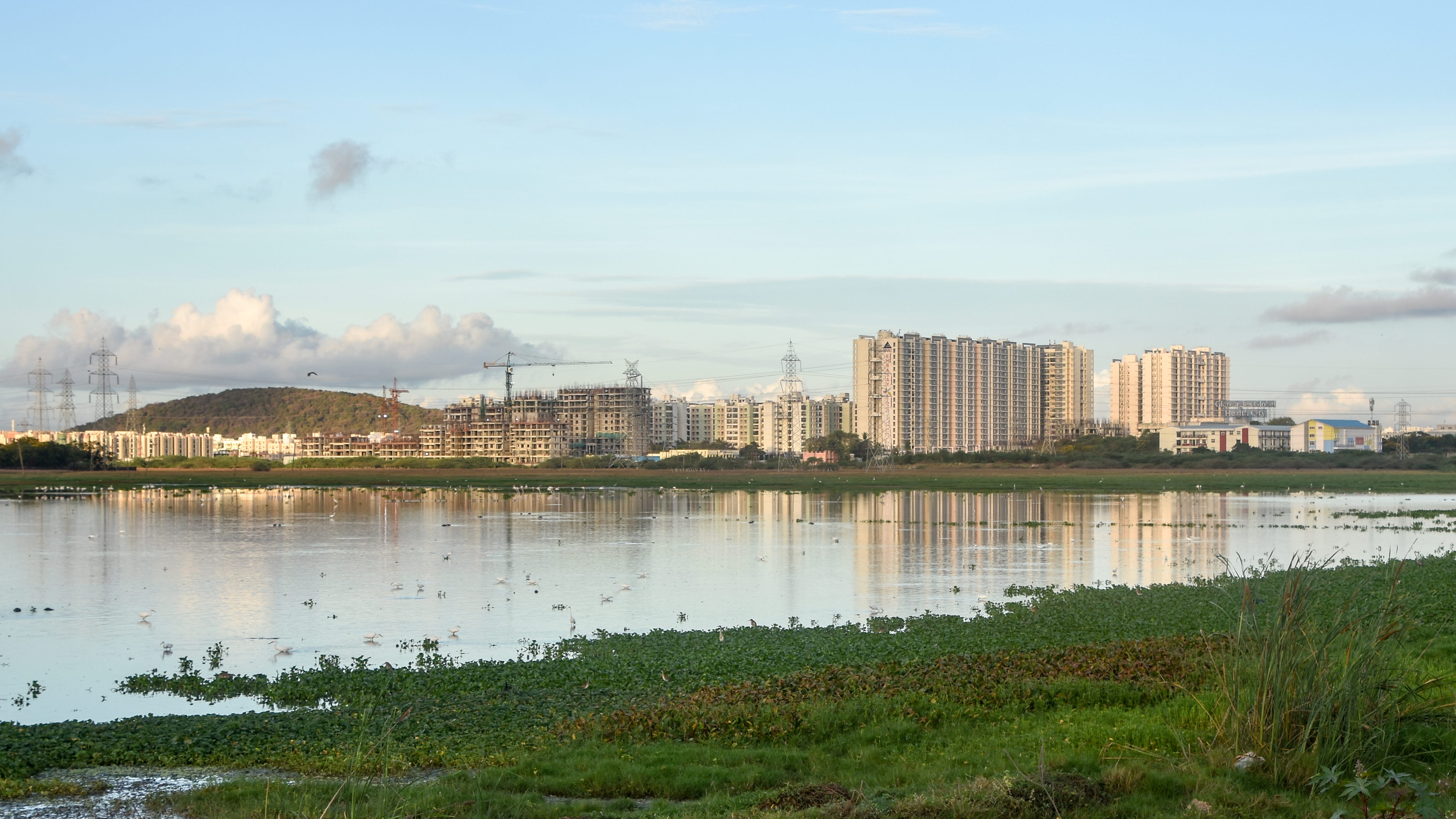
Urbanisation in India and in Chennai has been pivotal in altering our state of existence in the recent years. In our short hours and distracted lives, we struggle to centre our personal goals in alignment with the environment around us. This fast-paced life has alienated us from the biodiversity that surrounds, rendering them almost subsidiary to human existence; causing their neglect, and degradation.
Land, waterbodies and other organisms have for centuries lived in coalescence with human life, providing a blueprint to the communities that it developed alongside with. They now fester in the face of encroachment caused by concretised jungles and residential blocks. It is a reality that we, as citizens of Chennai have met in recent years, with the steady crawl of state privatisation and collective disregard of natural resources like wetlands, lakes and forests.
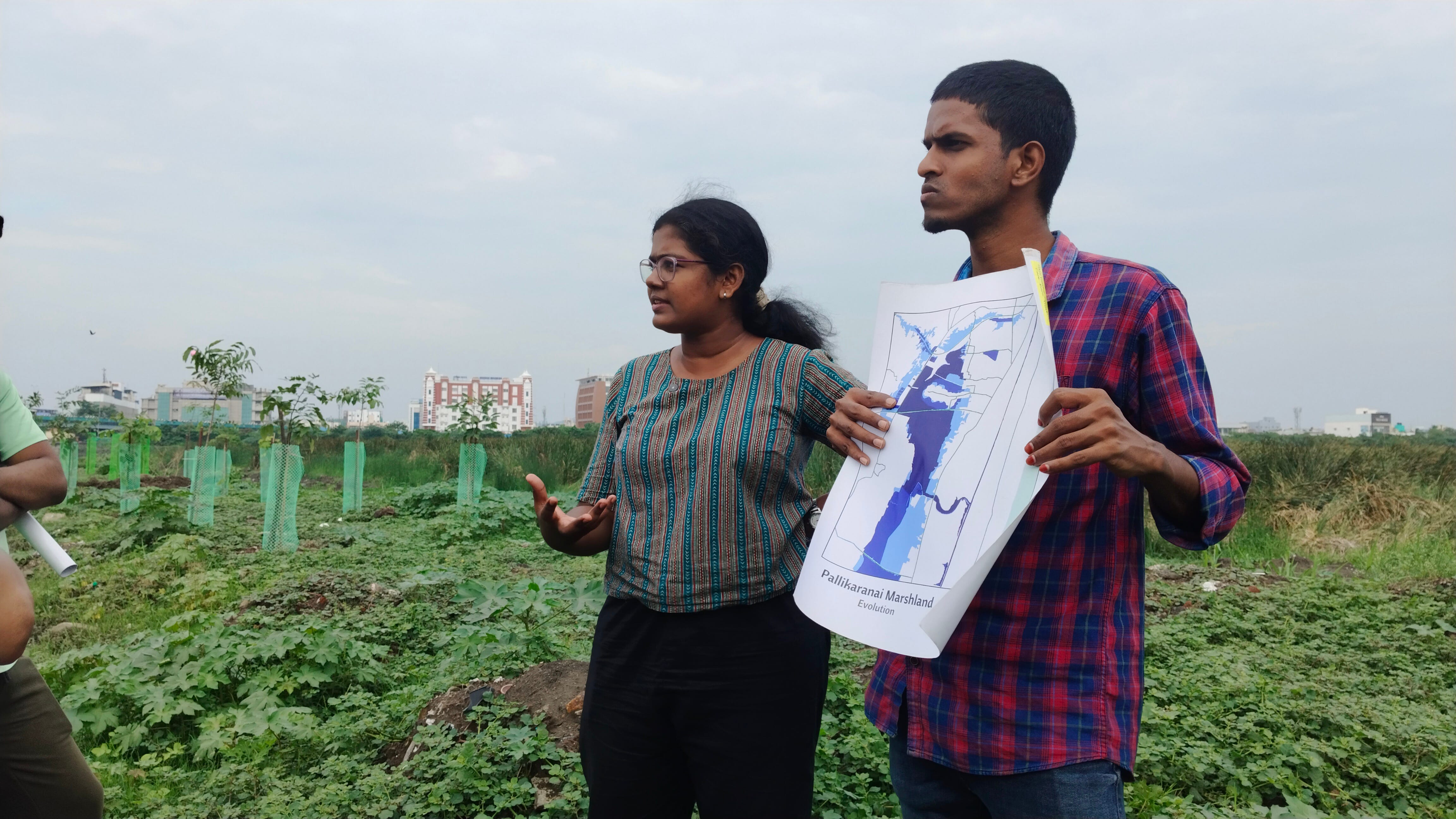
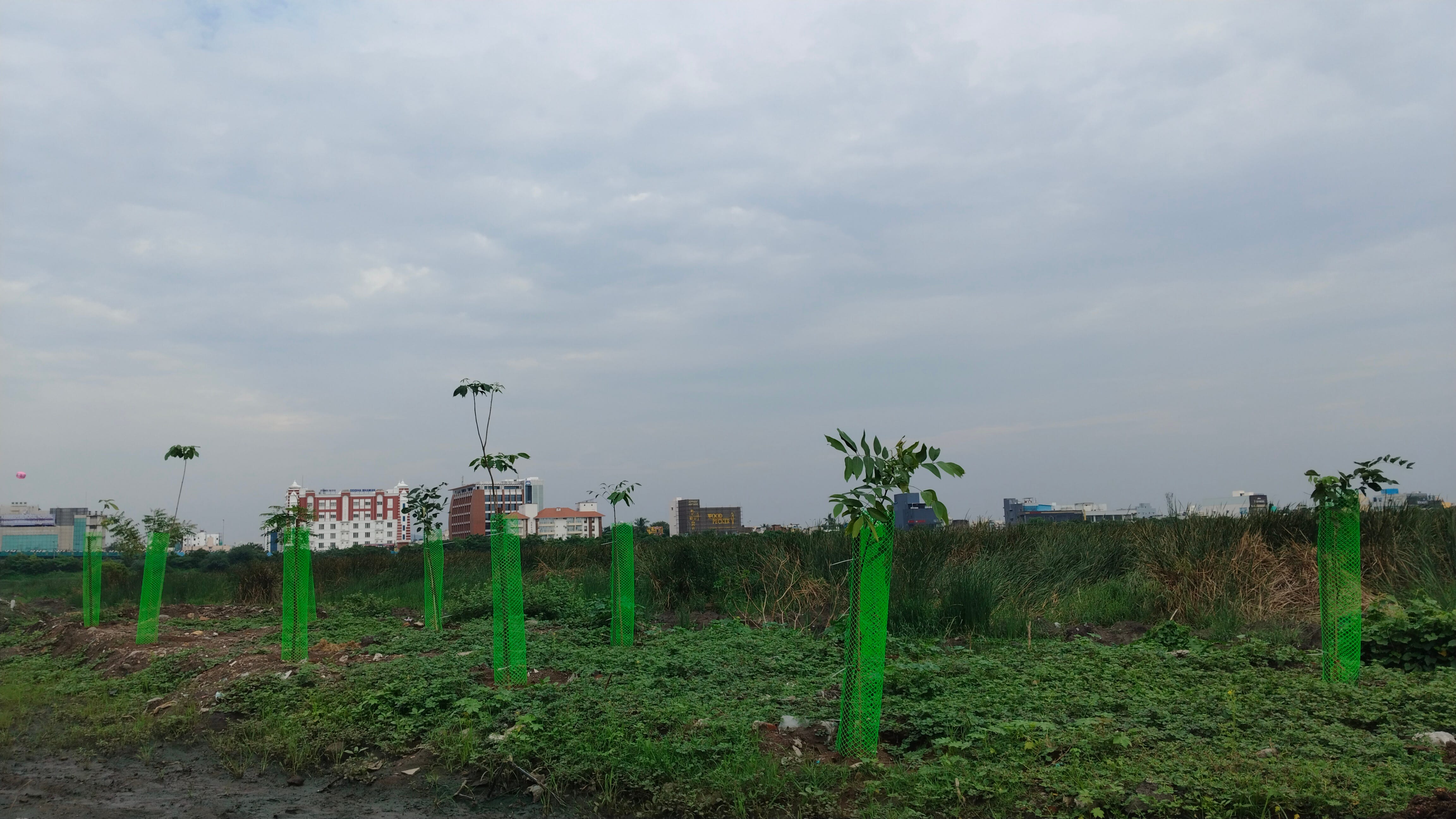
On a drizzling Sunday morning, I met with the Core Team of Aram Thinai, a youth-led climate action and eco-social justice group based in Chennai. About twenty volunteers, including me, signed up for the Wetland Tour organised by them to explore the city’s flood mitigating and water-storing water bodies in the Pallikaranai Watershed—a 234 km² land mass which acts as a natural sponge for flood control and ground water recharge, located around the Pallikaranai Marshland. I did not have any expectations for what I was about to learn, or how it will change how I viewed my city.
Being one of the last remaining, ecologically sensitive wetlands in India, the Pallikaranai Marshland is classified as a ‘Ramsar site’, a wetland officially recognized for its international importance under the Ramsar Convention on Wetlands, 1971. If some can recollect, on May 31st last year, a portion of this area near Perumbakkam caught fire overnight, spreading to the grounds of the nearby Global Hospital. Though it was brought under control in two hours, one must ask, how come a marshland, a region practically soaked in water, and defined for its prolonged water presence and hydrophytic (water-loving) vegetation, catch fire at all?
Some onlookers stated that it’s the summer heat, the worst it had been in years. Others claim that it is because the marshland and the surrounding areas are so encroached upon that it is drying up. Nevertheless, I remember how this incident had turned many heads back then, including people who had little to no concern for the environment, like I used to be. Was this an isolated incident of negligence, or a result of a consistent pattern of ecological degeneration? When did I, or anyone from the two hundred thousand odd people who everyday tread the Radial Road in Thuraipakkam which bifurcates and splits the marshland, stop to think about it?
Our tour began at the banks of the rapidly shrinking Adambakkam Lake, under the unserviced Adambakkam railway station, assailed by the loud gashes of cars and two wheelers that scooted across the Jawaharlal Nehru Road. Madan and Benisha, our guides from Aram Thinai, led us to the banks of the lake. Raised by a lake bund, the water appeared thick and contaminated, seemingly saturated beyond its means. Madan explained its history, holding out a map designed by the National Mapping Agency in 1971. It showed how years ago, Adambakkam lake stretched wide, swelling to the north near the settlements of present-day Thillai Ganga Nagar and to the south near Ullagaram residential area. The lake which occupied over 86 acres of land just four decades ago, has now shrunk up to six acres, dampened by encroaching roads and buildings. Frustratingly, the lake banks and a larger part of the lands surrounding it (termed as eri porambokku,) over the years had been brokered out relentlessly in cheap prices, further accelerating an unchecked urban sprawl.
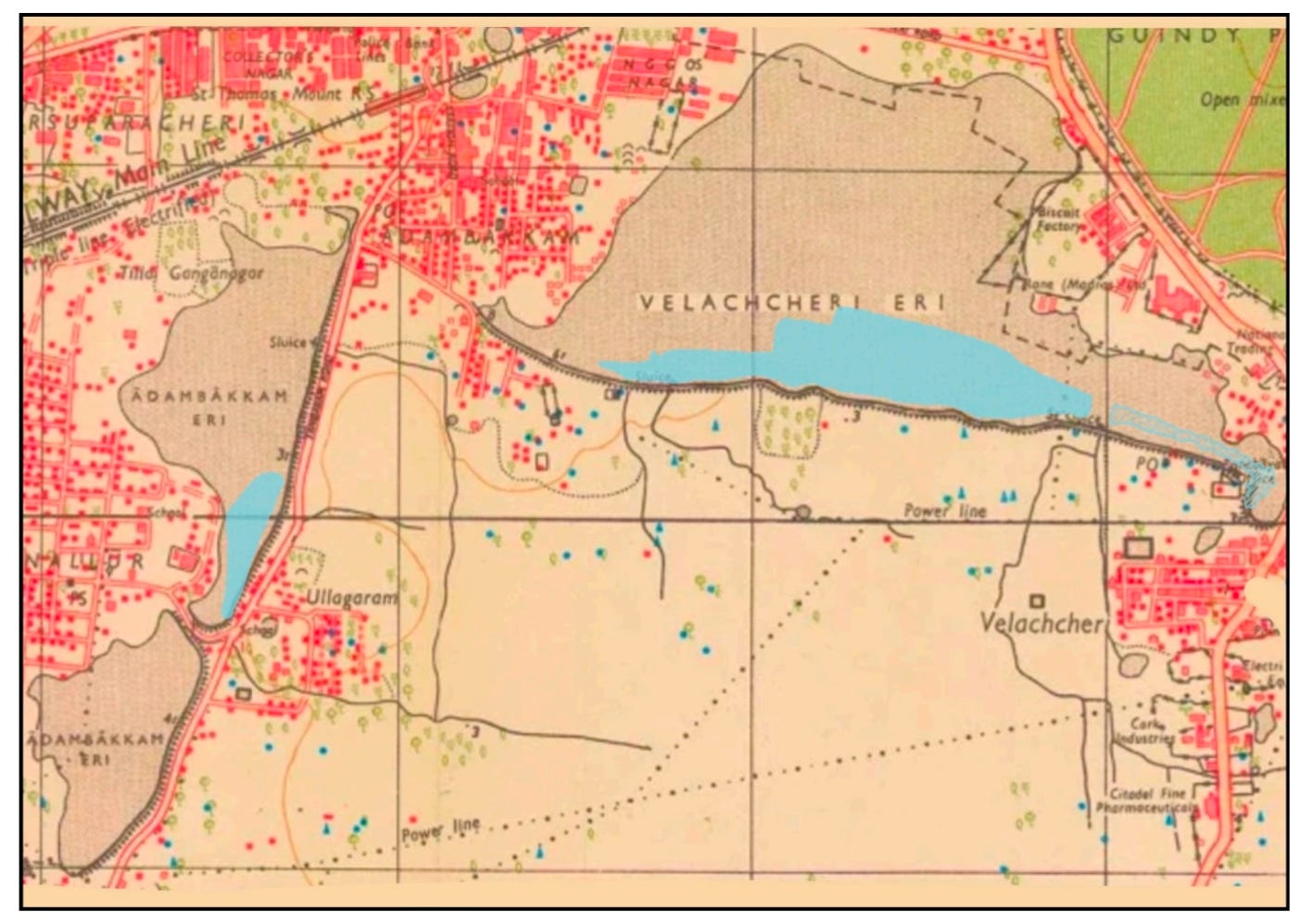
The map also painted a grim picture. When Benisha showed us another map of a lake that was lost to urbanisation, I was surprised by the proximity to which it used to exist to my college. The Nungambakkam Long Tank, a boomerang-shaped natural lake which extended for five miles from Sterling Road to Saidapet, slid by the Horticultural Garden near the St. George Cathedral and traced most of what used to be today’s Anna Salai. It is now a mere memory from a map drawn during the British colonial regime. Even the ghost of what was originally Adambakkam lake, remain out of the modern-day official CMDA maps.
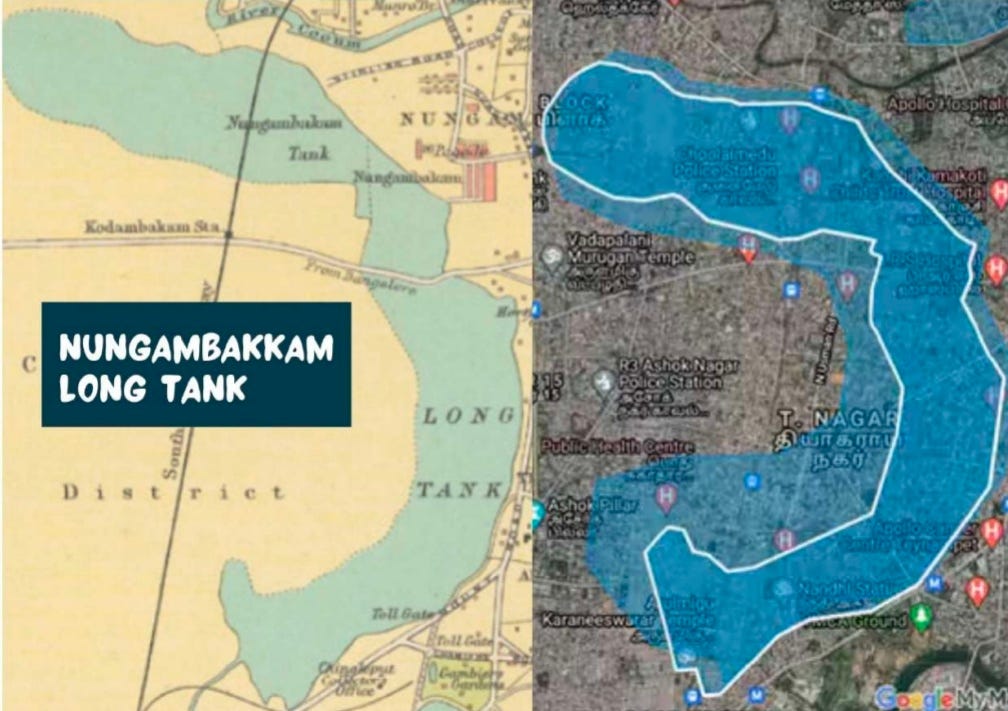
“Chennai used to be known as a blue-green complex,” Madan recalled, “owing to the large number of estuaries, waterbodies and wetlands it housed: like the Nungambakkam Long Tank, the degraded Manali Marshland and Retteri Lake in Madhavaram, besides the Pallikaranai Marsh. It is an irony now that Chennai deals with groundwater salinity and decreasing water-security,” he added.
Wetlands contribute to groundwater recharge, allowing water to percolate through permeable soil into the ground. The draining, filling and soil altercation that happens during encroachments and illegal constructions rob the wetland of its most essential function, water absorption — significantly damaging the entire water cycle and disrupting the natural ecology of wetlands. Pallikaranai Marsh, in this way, still stands threatened.
As our tour moved towards the Pallavaram Periya Eri near the Mantri Serene apartment complex, I began to notice the superficiality of modern residential areas: rigid towering blocks in monotonous colours, often facing or in the middle of an isolated road, advertised with ‘facilities’ like the eco-park which this one came with. How did people here deal with the longing for a community, or do they simply swap it with aesthetic pleasures, like opening the window and be passively satisfied that they have a lake-view?
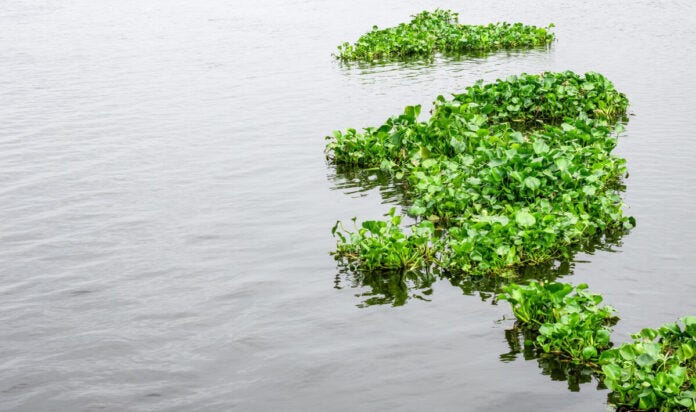
The narrow walking ground dividing the lake and the apartment complex was infested with African snails. When explaining the emergence of Aagaaya Thamarai (water hyacinths) in the Pallavaram lake as a key indicator species that signal water pollution, Benisha confirmed that African snails which develop in humid, tropical regions in India are just as invasive. These agricultural pests consume more than 500 different plant species, and carry the parasite which causes meningitis in humans. The waste from the Central Leather Research Institute, garbage from a portion of Tambaram’s residential areas are dumped into the Pallavaram Lake, polluting it, causing the water hyacinths to proliferate rapidly and consume a large amount of pollutants for its growth.
“The constructions workers who built the Vels University told us that to lay the foundation for the building, the groundwater beneath the site was fully pumped and the soil quality was altered, facilitating the encroachment,” Benisha shared. “Moreover, when constructions are made next to waterbodies, it compartmentalises the natural movement of water, denying ground water recharge to certain areas from a water catchment.”
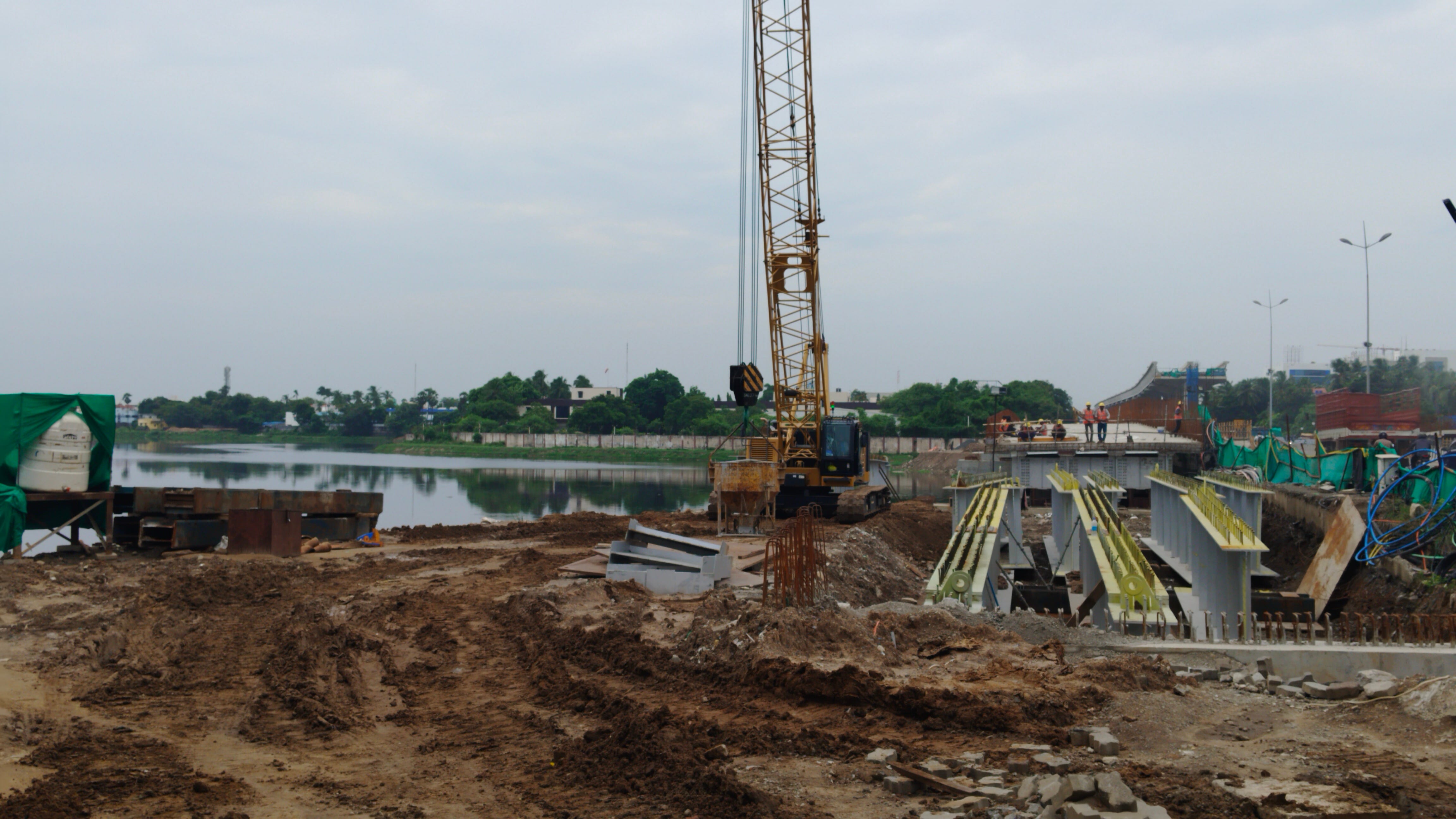
The water from all canals and lakes here, I learned, go to the Kovalam sub-basin and then mix into the Buckingham Canal. When encroachments like this constrict the natural drainage channels like the rivers, canals, lakes and stormwater drains, it exacerbates the risk of flood during the monsoon months. The growing city cover creates more cemented zones that are impenetrable by water, signalling unplanned urban development.
There is a public aspiration that is attributed to urbanisation, that drives the state-sanctioned encroachments and constructions of new IT parks in key industrial cities like Shollingnallur, Perungudi, Vadapalani, Arumbakkam, Nungambakkam, Anna Nagar and Ambattur. This economic facade of development is coupled with the aestheticisation of adjacent waterbodies, wetlands and eco-parks, used primarily by an unconcerned middle-class that toils day and night. Humans here live severed from the land, even if one stands right on top of it.
When legal encroachment cases are filed by the citizens near these waterbodies and wetlands, it is usually after persistent petitioning and protests from the communities that have for decades co-existed in these lands, who are directly impacted by the poor choices of the government. Chennai Metropolitan Development Authority (CMDA) is solely vested with the power for mastering, planning, regulating and approving major developments across the Chennai Metropolitan Area. It is also responsible for addressing the urban bottleneck regions, and delegating construction authority to local bodies who end up brokering out pattas (land license), manipulated by political influence. How could CMDA reclassify an eri porambokku land to an ‘open/recreational space’ and then five years later, to a ‘commercial zone’, in spite of being acutely aware of the biodiversity and livelihoods it threatens? What defines people welfare, what doesn’t?
Faced with the consequences of its own planning, the state’s solutions often seem to cause further entrenching ecological and social divides. Deeply flawed eviction and resettlement projects, like the Perumbakkam Housing Scheme which was initiated by the Tamil Nadu Slum Clearance Board in 2011, hoarded tens of thousands of citizens from economically-weaker sections into inadequate living conditions in Kannagi Nagar and the flood-prone Perumbakkam. Essential facilities like properly functioning schools, Anganwadi centers (daycare), and fair-price shops have been reported as insufficient or poorly managed here. The short film Nagarodi, produced by Pa. Ranjith, platforms the voices of marginalised people who face economic and physical uncertainties caused by the resettlement, and other youth who lament the institutional change that reshaped their personal lives and careers. “No proper policy for rehabilitation and resettlement has been created by the government so far,” Madan mentioned.
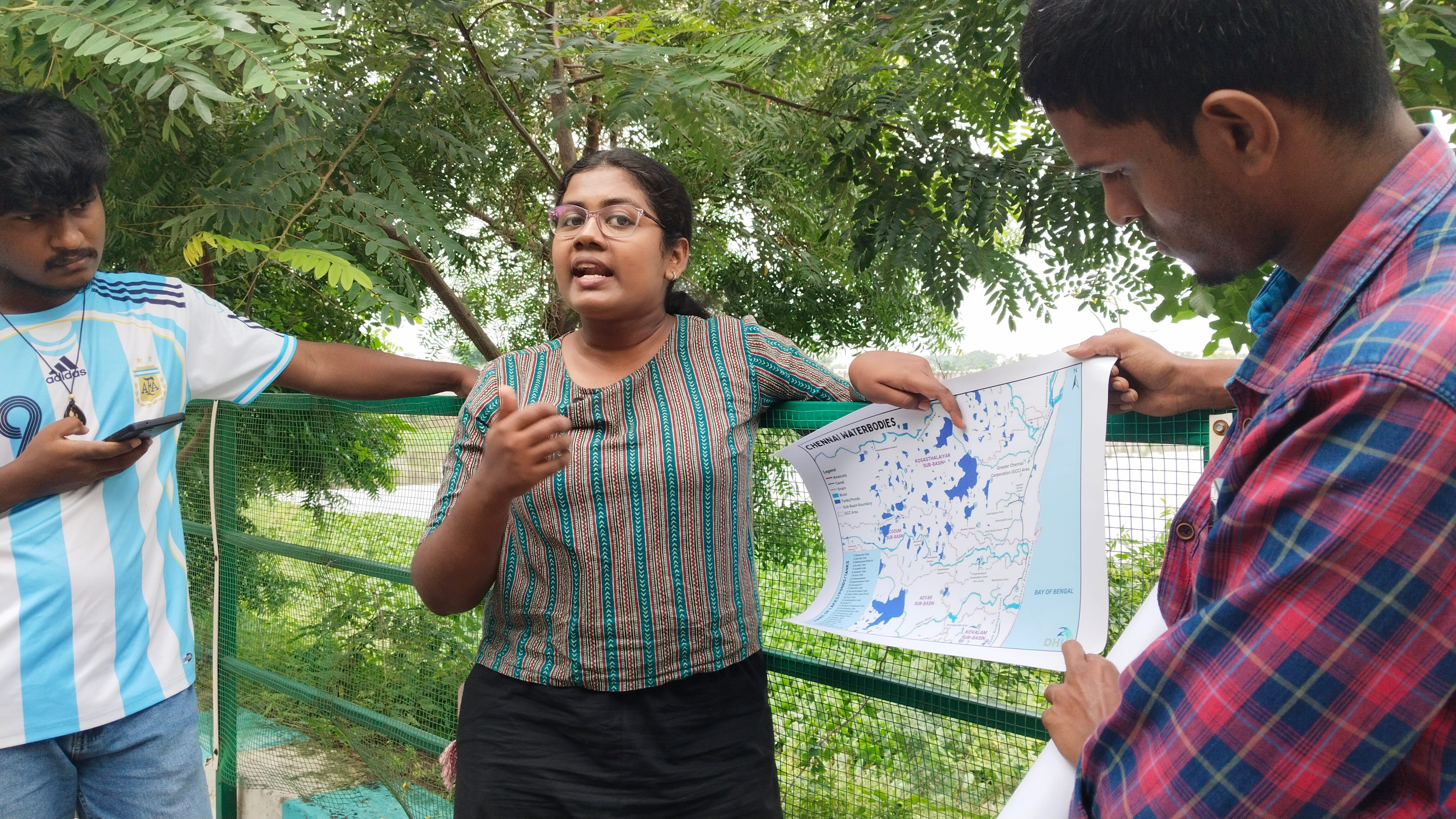
“Ironically though, during the monsoon when it floods,” began Benisha, “elite-Brahmin settlements in Pallikaranai and Madipakkam have the advantage of having the floodwater drained from their localities a lot quicker by motor, an option not available to many, reflecting how the map of ecological crisis is also a map of social inequality.” The loss of natural habitats, I realised, is not a burden shared equally. The structural weight of this phenomenon is unfairly scattered towards the marginalised, while seeming to prioritise and benefit the socio-economically privileged sections of the city.
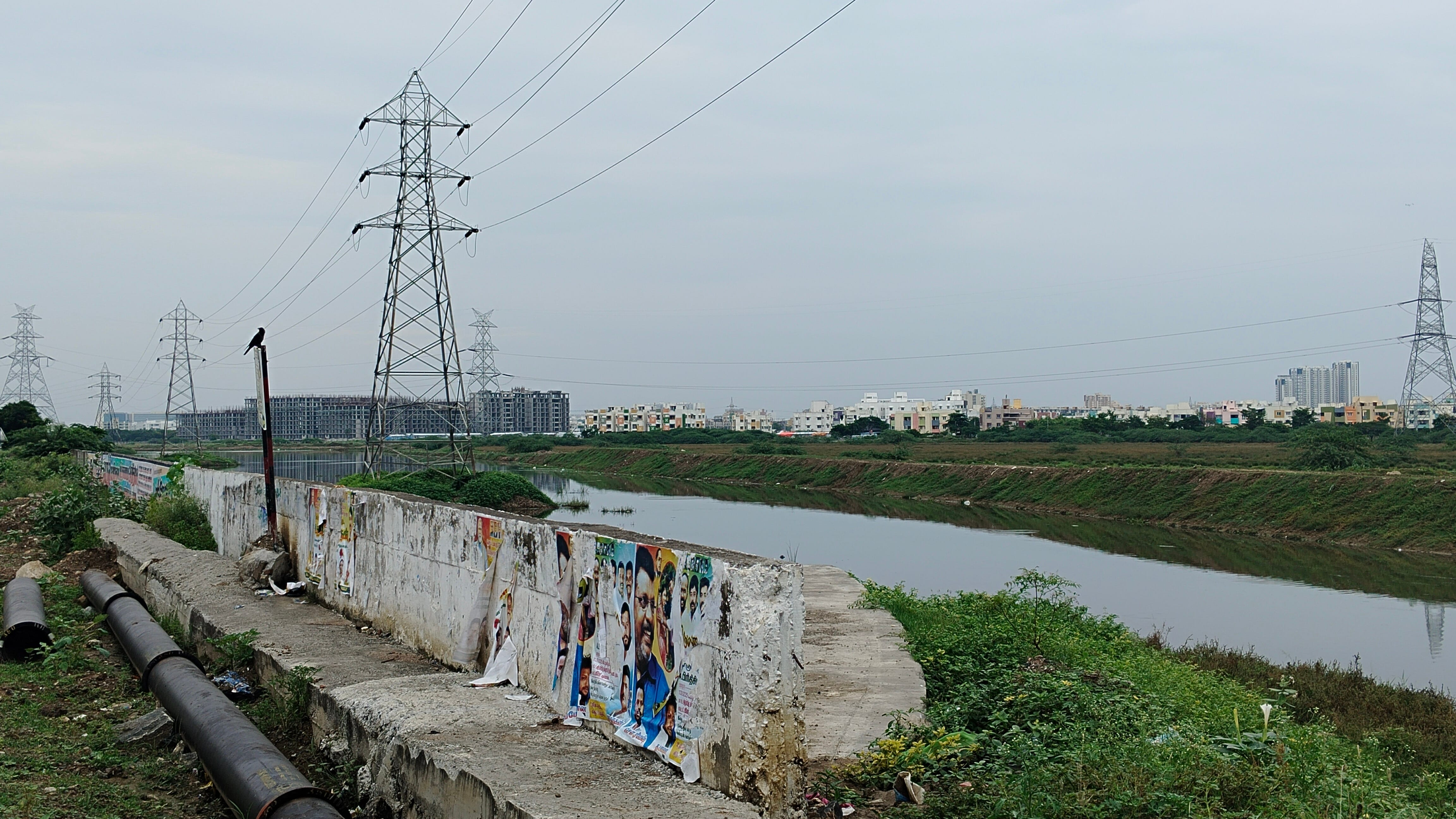
Her observation struck the final nail. What could I, a student of Journalism, do? The tour concluded with our last spot being the Slum Clearance Board, a material ground of intersection— a distant array of yet another half-finished construction site beyond the Nookampalayam Canal of Perumbakkam on one end, and small-scale shops assorted one after another, burgeoning with displaced locals on the other. Until the city learns to see its water bodies not as vacant plots and its people not as problems to be relocated, the cycle will only tighten, leaving a increasingly saline and divided city in its wake.
Urbanization 🌆 is necessary but not at the expense of my mother city Madras' 🏙️ well-being; your article offers profound insights 📚, comrade 👫.
As a local to Pallikaranai, I agree with everything